

Selected project artwork
Sey Circular Biosphere
An island scene held inside a circular form. Nature, place and purpose become one visual starting point.
See the website storyNexney / The creative portfolio
Website & platform storiesYour business has a character. Let it come through in the places people meet it: a logo, a building, a proposal—and the way the work gets done.
Selected identity artwork, new application concepts and original systems studies. Explore the detail behind each idea.

01 / Identity & material
Colour, finish and context change how a mark feels. These studies begin with retained project artwork, then explore how an identity can grow into a wider visual language.


Selected project artwork
An island scene held inside a circular form. Nature, place and purpose become one visual starting point.
See the website story
Selected project artwork
A bold green mark with water and leaf details. The identity gives product material a consistent point of recognition.
See the product imagery study02 / Brand applications
Recognition comes from carrying the same idea across different surfaces. One identity, considered at three very different scales.
New Nexney concepts, visualised with AI assistance. These depict possible applications, not existing premises, vehicles or manufactured garments.
A mark changes when light, scale and materials become part of it. This study carries the Nexney identity onto a building, with space around the lettering and a quieter supporting line.
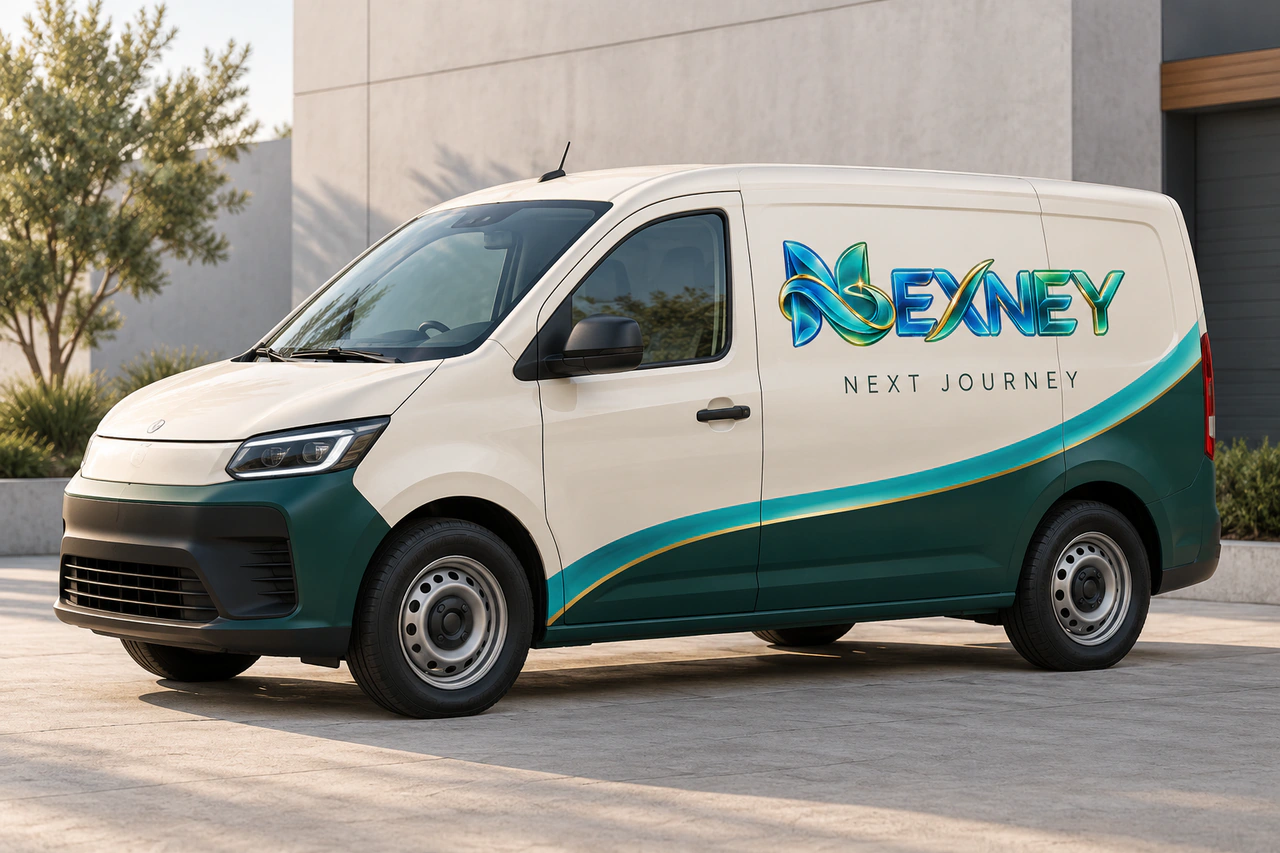
One strong mark, a clear colour division and room to breathe. The same identity becomes a moving introduction, designed to be understood at a glance.
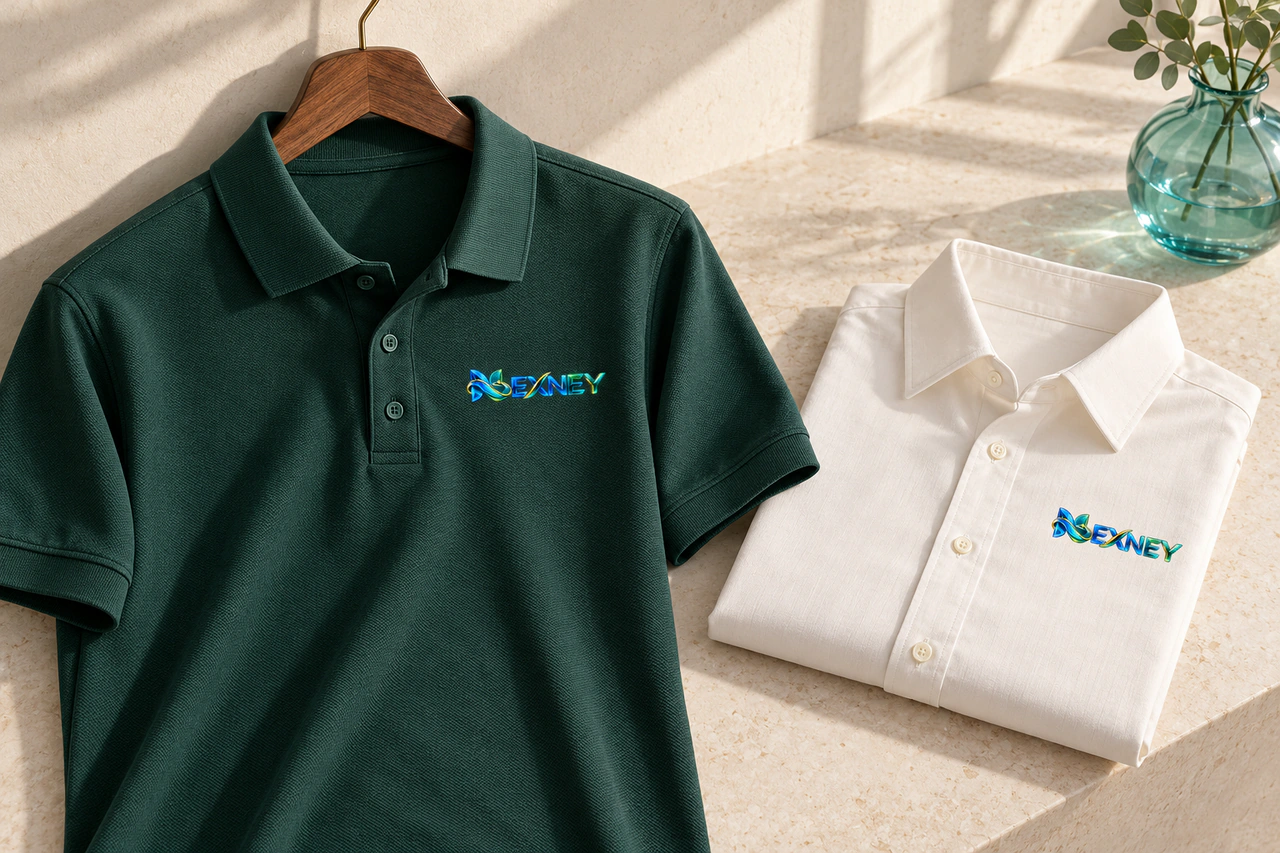
On clothing, restraint matters. Smaller placement and a simple palette carry the brand without overwhelming the person wearing it. Production artwork would be prepared for the chosen print method.
Imagine the same care applied to your own identity.
Discuss your brand material03 / Documents with purpose
A proposal should help someone decide. A brief should help them explain. A report should help them see what changed. The layout follows the job the document needs to do.
Three Nexney template studies. Each uses illustrative sample content; download the editable Word version or inspect the finished PDF.
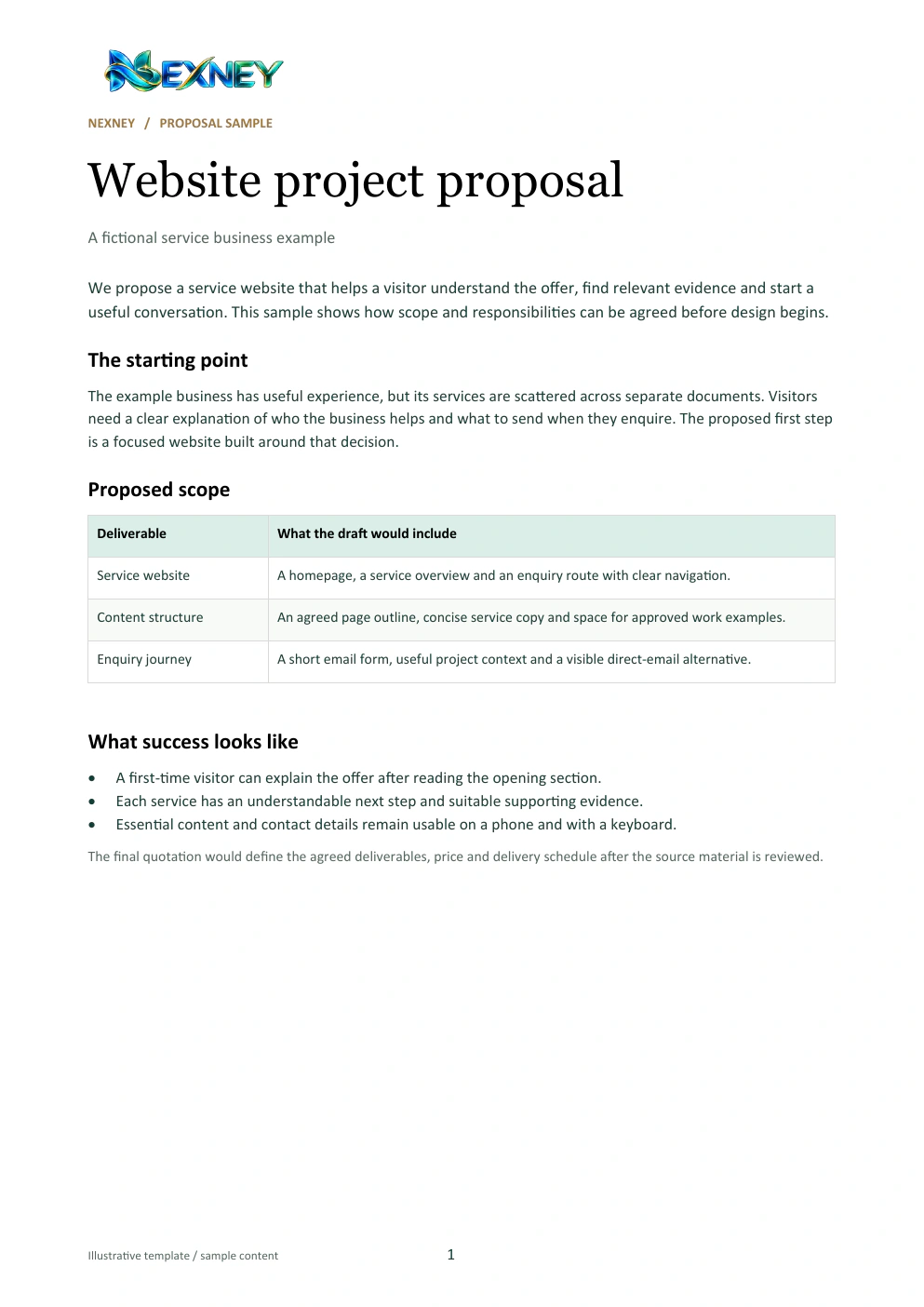 2 pages / Sample
Project proposal
Make the opportunity, scope and next decision easy to find. A considered opening followed by practical project detail.
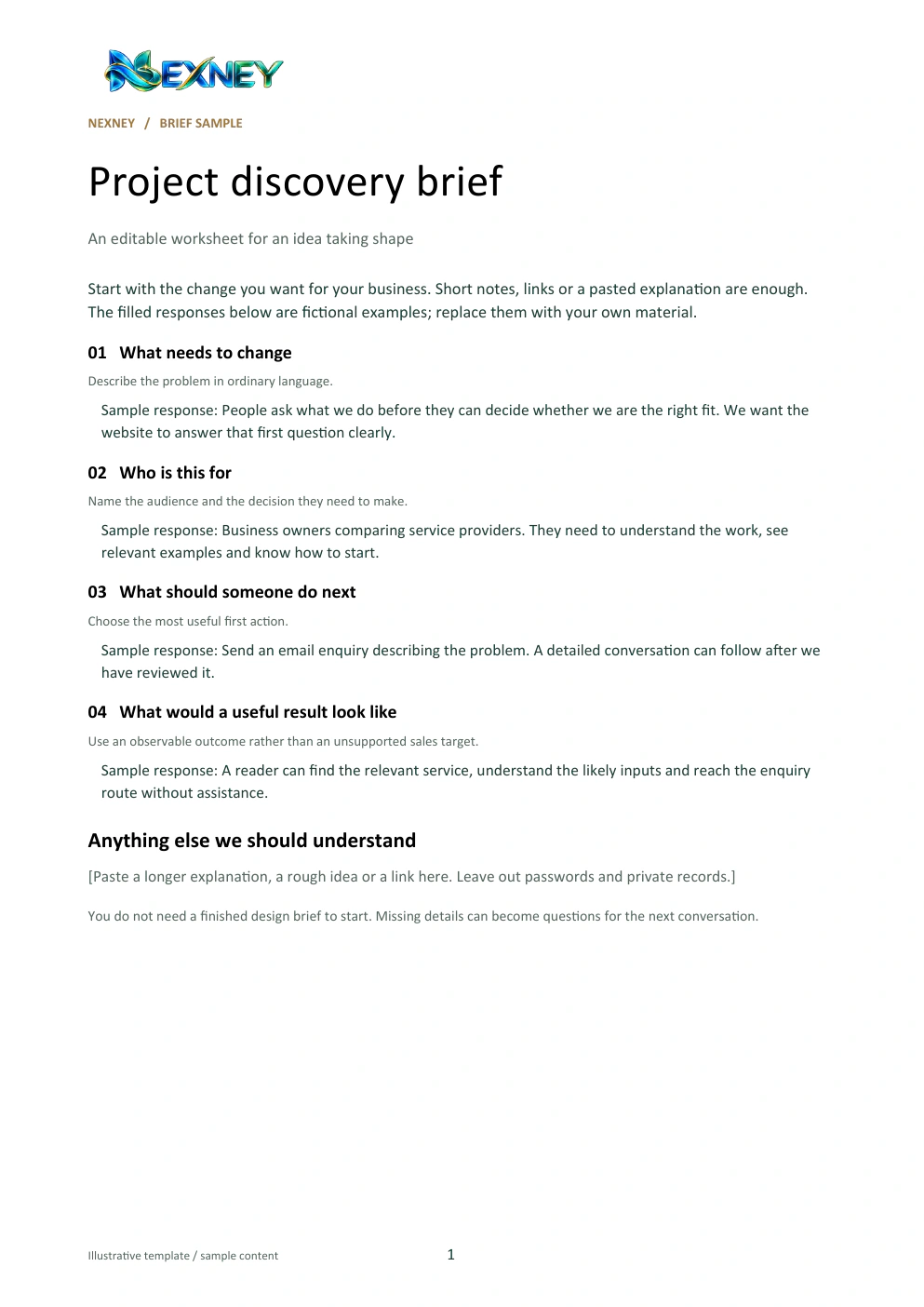 2 pages / Sample
Project brief
Turn a loose idea into a useful conversation. A working document for goals, audience, materials and the decisions still to make.
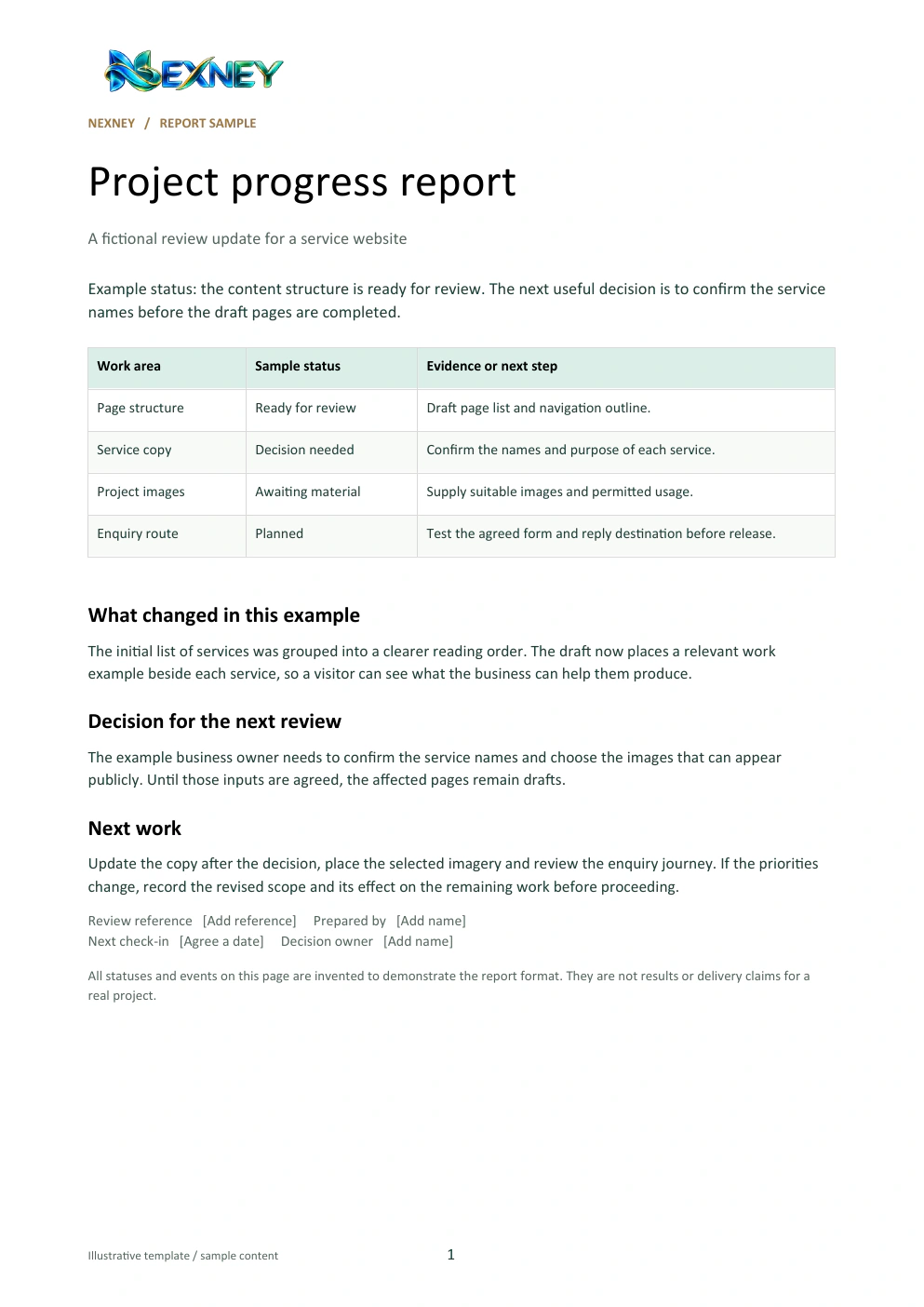 1 page / Sample
Progress report
Show what moved forward, what needs a decision and what happens next. A concise report built for an ongoing working relationship.
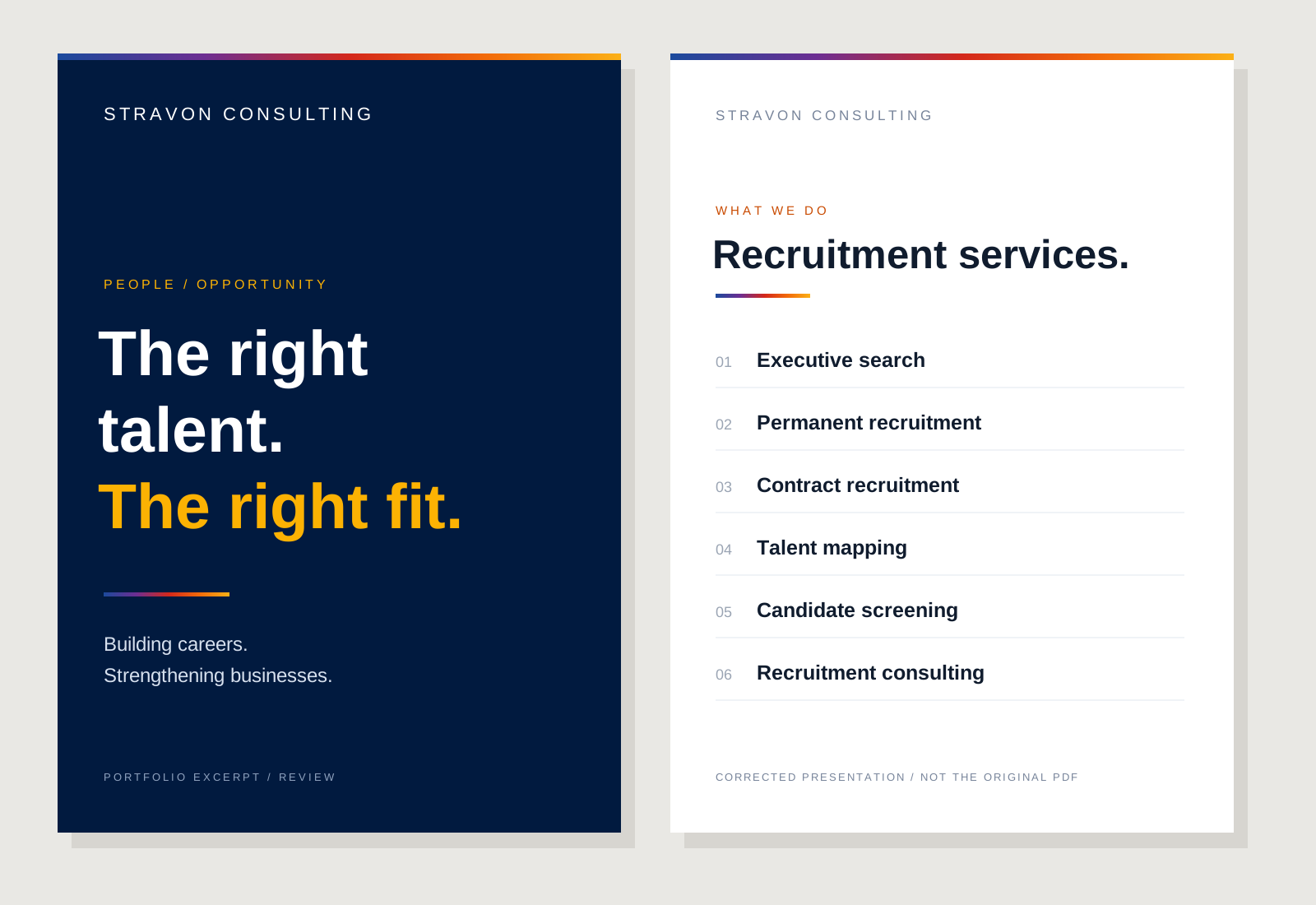
From the project archive
Stravon’s editorial study brings service information into a more considered reading order, using the supplied identity. This is a reconstructed portfolio excerpt.
Explore the Stravon storySystems design / Three illustrative studies
Your system needs to carry the right information to the right person, with a clear next step when something changes.
Explore three original design examples: the data they keep, the decisions people make and the details that make a workflow dependable.
Illustrative architecture. All scenarios, records and roles below are fictional. These are design studies, not diagrams of a deployed client system.
A document arrives. Someone extracts the useful details. Then a correction comes in. Your team needs to know which information is current and why it can be trusted.
Design intentionA record with a route back to its evidence.
Retain the original note and identify its revision.
Carry forwardSource + revision + received datePropose useful details with a reference to the exact passage.
Carry forwardProposed value + evidence referenceA reviewer checks the source, resolves ambiguity and approves this version.
Carry forwardDecision + reviewer role + reasonMake the approved version available while keeping its history.
Carry forwardApproved snapshot + source linkCreate a new draft and request another review. Keep the last approved record clearly labelled until its replacement is approved.
Revision 2 approved
Both source versions remain available to the reviewer. The new value does not erase the reason for the change.
The proposed time stays attached to the source revision and passage. A polished summary alone does not establish that a fact is correct.
A reviewer approves the specific draft they inspected. If the source changes during review, the decision pauses until they see the new version.
Retain the source and retry the same work item. A second attempt must not create a second approved record or silently guess a missing value.
Record the source revision, proposed change, reviewer role, decision time and reason. Preserve previous approvals.
Versioned review adds a human step and a queue to manage. It is useful when an incorrect published detail would cost more than the time spent checking it.
If a second approval becomes necessary, introduce it at the decision point and migrate open work deliberately. Keep the evidence and previous decisions intact.
A request is discussed in one place, approved in another and delivered by someone else. You should be able to see what was agreed, who is responsible and what is still waiting.
Design intentionA handover with context, responsibility and a receipt.
Give one request a reference, an owner and the details needed to act.
Carry forwardRequest + scope + supporting materialIdentify missing information and prepare a clear proposed action.
Carry forwardRequirements + cost estimate + due dateThe responsible person accepts, declines or returns the proposal.
Carry forwardApproved version + limits + decisionAssign the approved work and retain evidence that it was completed.
Carry forwardWork reference + owner + completion receiptMark the outcome as unconfirmed, check the existing work reference and ask its owner. A timeout must not trigger a duplicate order.
Waiting for approval
If the quantity changes, the proposal returns for review. A previous approval cannot authorise a larger request.
Keep the request, its revisions, approvals and fulfilment receipt connected. People can find the full context without copying it into every handover.
The approver accepts an explicit scope and limit. A material change to quantity, cost or specification creates a new decision, rather than borrowing an old one.
Repeated submissions resolve to the existing work reference. Failed notifications can be retried; ordering or delivery needs its own confirmed receipt.
Keep each scope revision, state change, responsible role and reason. Completion evidence is a separate event from approval.
Clear stages reduce uncertain handovers, but too many approvals can slow ordinary work. Start with the decisions that matter and make exceptions visible.
As the team grows, responsibility may move from one person to several departments. Redesign routing and access together, while existing requests retain an accountable owner.
A campaign gets attention. A few people enquire. The valuable question is which message helped the right person understand your offer, and what you should improve next.
Design intentionA connection between creative work and an honest next decision.
Give the offer and each creative version a distinct reference.
Carry forwardCampaign + creative + intended audienceCarry a known campaign reference into the enquiry when available.
Carry forwardEnquiry + source reference + unknownsA person checks fit and records what the customer actually needs.
Carry forwardHuman assessment + next step + reasonCompare observed outcomes and choose the next change to test.
Carry forwardRecorded outcome + limits + next hypothesisKeep the enquiry and label its source unknown. Ask when useful, preserve any self-reported answer separately and avoid assigning credit by guesswork.
Illustrative trace
This is an invented example, not a campaign result. No visitor, enquiry or revenue data is represented here.
Store an observed source reference separately from what a person says influenced them. An unknown source remains unknown; one link does not prove causation.
An enquiry is an expression of interest. Qualification, quotation and a paid project are different outcomes with their own evidence and decision dates.
Repeated form delivery links back to the same accepted enquiry. Reporting can be rebuilt from recorded events without counting the same conversation twice.
Record changes to qualification and outcome with a responsible role and date. A project enquiry does not create permission to send marketing.
Less individual tracking means some journeys stay incomplete. Use aggregate signals and voluntary conversation context, and describe those limits when making decisions.
When the offer or audience changes, update the questions and outcome definitions. Preserve the old definitions so yesterday’s results are not silently reinterpreted.
Opening these studies sends no request and saves no data. The diagrams explain design choices; they do not run a connected service.
The work continues
Explore the websites, platforms, films and character work that bring the wider portfolio together.
Explore website & platform stories